
x

- 304, Al Wasl Road, Jumeirah 1, Dubai - UAE.
- We are Open Daily from 12:00pm to 12:00am!

Visit Us Today!
- 304, Al Wasl Road, Jumeirah 1, Dubai - UAE.
- Garden - Mon to Fri - 3pm to 7pm
- Brunch - Sat and Sun - 12pm to 4pm
- Business Lunch - Mon to Fri - 12pm to 3pm
- info@monno.ae
- 02 Apr, 2026
- By: Monno Ristorante
A real Italian ristorante invests in the kitchen first. That means a proper pizza oven, fresh ingredients brought in daily, a chef who knows the difference between making pasta and boiling it.
Dubai has hundreds of Italian restaurants. Some are tucked
inside hotels. Some sit in busy malls. Some line the streets of Jumeirah, JBR,
and Downtown. They all claim to serve Italian food. Most of them are not lying.
They do serve Italian food, in the same way that a frozen lasagne from a
supermarket is technically Italian food.
The gap between a typical Italian restaurant and a genuine Italian ristorante is wide. Once you know what to look for, you cannot unsee
it. This article breaks down exactly what that gap looks like, why it matters,
and how to find the real thing in Dubai.
It Starts With the Kitchen, Not the Decor
The first thing many restaurants invest in is the look.
Exposed brick, vintage wine bottles on shelves, photos of the Amalfi Coast on
the walls. These things are fine. They are also completely irrelevant to the
quality of the food.
A real Italian ristorante invests in the kitchen first. That
means a proper pizza oven, fresh ingredients brought in daily, a chef who knows
the difference between making pasta and boiling it, and a commitment to doing
things the way they are done in Italy, not the way they are assumed to be done.
Decor can be copied in a weekend. A kitchen culture takes
years to build. When you walk into an Italian restaurant in Dubai, ask
yourself: does this place feel like it cares about the food, or does it feel
like it cares about the atmosphere?
Both can coexist. But when a restaurant only has one of
them, it is almost always the atmosphere.
The Menu Tells You Everything
Look at the menu carefully before you order anything.
A typical Italian restaurant in Dubai tends to have a long
menu. Very long. You will find pasta, pizza, risotto, seafood, steaks, and
sometimes dishes that have no Italian connection at all. The reasoning is
commercial. A long menu means something for everyone, which means more covers
filled, more revenue generated.
An authentic Italian ristorante has a shorter menu. Not
because they are cutting corners, but because they are focused. Every dish on
the menu is there for a reason. The kitchen can execute all of it properly
because they are not trying to cook forty different things at once.
Italian food, at its heart, is regional. A trattoria in
Naples does not serve the same dishes as a trattoria in Rome or Bologna. Real
Italian restaurants understand this. They pick a direction, they stick to it,
and they do it well.
If a menu is trying to represent every region of Italy at
once, it is representing none of them honestly.
Pasta: The Clearest Line between Good and Average
Pasta separates kitchens fast.
A typical Italian restaurant in Dubai uses dried pasta from
a commercial supplier. That is not automatically a problem. Good quality dried
pasta, cooked properly, can be excellent. The issue is when restaurants use
cheap dried pasta, overcook it, and then pile on sauce to cover the result.
An authentic ristorante makes its pasta fresh, in house,
every day. You can taste the difference immediately. Fresh pasta has a softness
and richness that dried pasta does not. It holds sauce differently. It feels
different in the mouth. It takes more time and skill to produce, and that shows
on the plate.
The cooking matters just as much as the pasta itself. Al
dente is not a preference. It is the correct way to cook pasta. When pasta is
cooked past that point, the texture breaks down and the dish loses its
structure. A kitchen that consistently serves overcooked pasta is a kitchen
that is not paying attention.
Watch for the sauce ratio too. Authentic Italian pasta
dishes use sauce to coat the pasta, not to drown it. If your plate arrives
looking like a soup bowl, something has gone wrong.
The Pizza Oven Is Not Optional
In a real Neapolitan pizza kitchen, the oven runs at around
450 to 500 degrees Celsius. A pizza cooks in 60 to 90 seconds. The crust
blisters and chars slightly at the edges. The centre stays soft. The whole
thing has a lightness to it that is impossible to fake.
Most Italian restaurants in Dubai use electric conveyor
ovens or standard deck ovens. These can produce a decent pizza. They cannot
produce a Neapolitan pizza. The heat is not high enough, the cook time is too
long, and the result is a different product entirely.
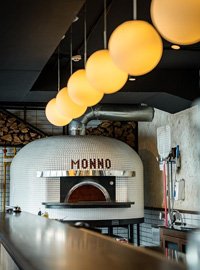
Ask before you order: does this restaurant use a real
wood-fired or stone oven? If they do, it will be visible from the dining room
or mentioned prominently. Restaurants that have the real thing are proud of it.
They do not hide it in a back kitchen.
A proper Neapolitan pizza also uses very few toppings. Three
or four, placed carefully. The Margherita is the benchmark. San Marzano
tomatoes, fior di latte cheese, fresh basil, a drizzle of olive oil. If a
restaurant cannot make a great Margherita, no amount of truffle, prosciutto, or
premium extras will save the rest of the menu.
Ingredients Are Either Imported or They Are Not
Italy produces ingredients that cannot be fully replicated
anywhere else. San Marzano tomatoes grow in volcanic soil near Naples.
Parmigiano Reggiano is made under strict regional rules. Guanciale, the cured
pork cheek used in a real carbonara, has a flavour that no substitute matches.
An authentic Italian ristorante imports these ingredients.
It costs more. It requires reliable suppliers and careful storage. Restaurants
that are serious about food accept that cost without complaint, because without
the right ingredients, the dishes are not what they are supposed to be.
A typical Italian restaurant in Dubai uses locally sourced
or generic alternatives. Again, this is not automatically wrong. Some dishes
work fine with local ingredients. But if a restaurant claims to make authentic
carbonara and uses cream in place of eggs, or substitutes Parmigiano Reggiano
with a generic hard cheese, it is not making an authentic dish. It is making
something inspired by that dish.
Inspired by and authentic are not the same thing. It is
worth knowing which one you are eating.
Service That Understands the Food
Staff at a genuine Italian ristorante know the menu. They
can tell you how a dish is made, where the ingredients come from, and what
pairs well with what. They eat the food themselves. They have opinions about
it.
This matters more than it sounds. When a server can explain
why the restaurant makes carbonara without cream, or why the pizza dough is
rested for a specific number of hours, you are in a place where the team
understands what they are serving. That understanding comes from being in an
environment that takes food seriously.
At a typical Italian restaurant, the staff may know the menu
well enough to take your order. They may not know anything beyond that. Neither
version is the end of the world. But the difference tells you something about
the kitchen culture.
Atmosphere Done Right
Authentic Italian dining is not loud and rushed. It is not a
timed experience where someone is waiting to clear your table before you have
finished your coffee.
The trattoria model, the one that real Italian ristorantes
are built on, is about taking time over food. You order a starter. You wait.
You talk. The pasta arrives when it is ready, not when a timer goes off. The
meal moves at a human pace.
Some of the best Italian dining in Dubai follows this model.
Monno Ristorante on Al Wasl Road in Jumeirah 1 is one example. The restaurant
is designed around the trattoria experience: relaxed, unhurried, focused on the
food. The garden is open Monday to Friday between 3pm and 7pm, and during the
cooler months it is one of the most pleasant places to eat in the city. The
pace there is different from a mall restaurant. It feels like a meal rather
than a transaction.
How to Spot the Real Thing
Here is a short checklist you can use before you commit to a
table.
Ask about the pasta. Is it made fresh in the kitchen? If the
answer is yes, that is a good sign. If nobody knows, that is an answer in itself.
Look at the pizza oven. Is it visible? Does it look like it
runs at serious heat? A cold or modest oven tells you what kind of pizza to
expect.
Read the carbonara. Does it contain cream? If it does, the
kitchen is not cooking traditional Roman food. That is a simple fact.
Check the ingredient list for imported Italian products. San
Marzano tomatoes, Parmigiano Reggiano, fior di latte, Guanciale. A restaurant
that sources these properly will mention it.
Watch the pace. A good Italian restaurant does not rush you.
If you feel pressure to order fast and leave fast, that is a volume operation,
not a ristorante.
The Bottom Line
Dubai has excellent Italian food if you know where to look.
The restaurants that get it right are the ones that treat food as craft, not
output. They have shorter menus, proper ovens, fresh pasta, imported
ingredients, and staff who care about what they serve.
The restaurants that fall short are not necessarily bad.
They just made different choices. They chose scale over depth, convenience over
craft.
When you sit down at a table on Al Wasl Road in Jumeirah 1,
at a place like Monno Ristorante, you notice the difference within the first
few minutes. The bread arrives with real olive oil. The menu is focused. The
oven is real. The pasta was made that morning.
That is what authentic looks like. Once you have eaten it,
the typical version stops being good enough.
